Key takeaways
- A one-bed flat clearance typically costs £250–£450 outside London; a three-bed home £600–£1,200.
- Most quotes are based on how many van loads your items fill, plus access and the type of waste.
- You have a legal duty of care for your household waste. If an unlicensed operator dumps it, you can be fined.
- Always check the carrier on the public register and ask for a waste transfer note.
Typical prices in 2026
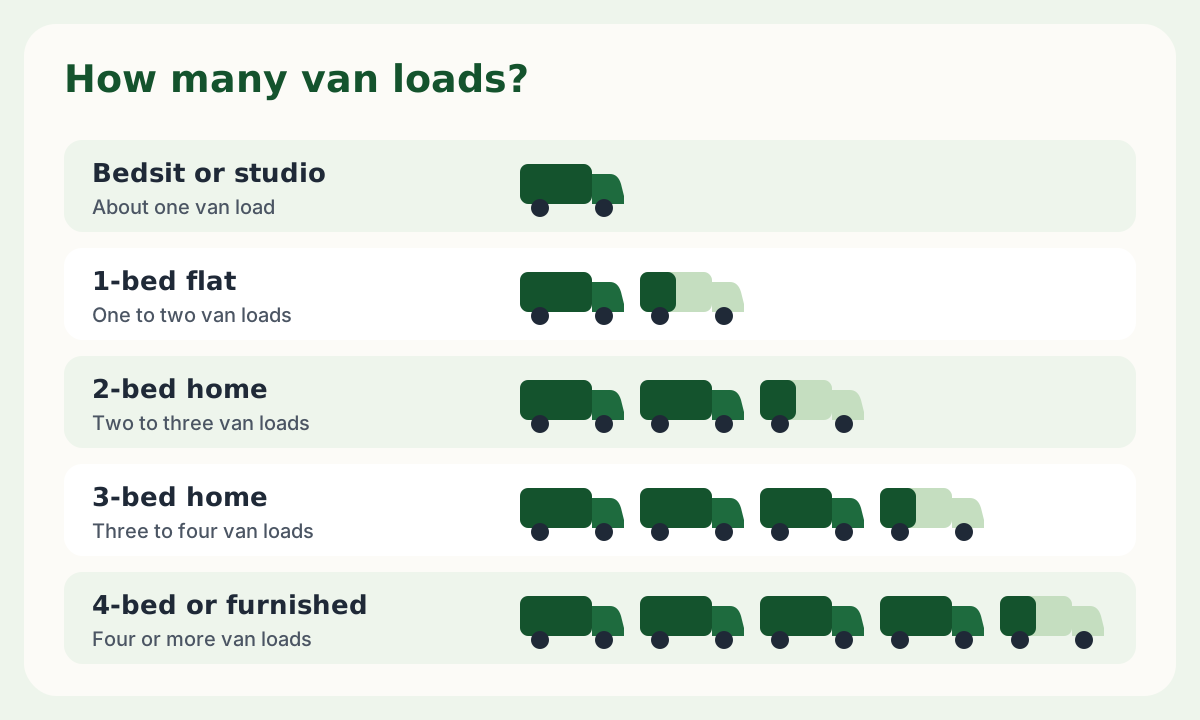
These ranges for a standard clearance outside London are compiled from published UK price guides in autumn 2026:
| Property | Typical volume | Typical cost |
|---|---|---|
| Bedsit or studio | About one van load | £150–£350 |
| 1-bed flat | One to two van loads | £250–£450 |
| 2-bed home | Two to three van loads | £350–£700 |
| 3-bed home | Three to four van loads | £600–£1,200 |
| 4-bed or fully furnished | Four or more van loads | £1,000–£2,000+ |
London and the South East are higher: around £190–£450 for small jobs, £320–£900 for medium homes, and £750–£2,600 or more for large properties.
What affects the price
- Volume: the number of van loads is the basis of most quotes.
- Weight and type of waste: heavy materials and items that need special handling cost more to dispose of.
- Access: ground floor with parking outside is cheapest; stairs and long carries add time.
- Saleable items: furniture or antiques with resale value can reduce the bill.
- Condition: damp, neglected or very cluttered homes take longer and may need a deep clean afterwards.
Some items usually cost extra because they must be handled and recycled in specific ways: fridges and freezers, mattresses, electricals, and anything hazardous such as paint, chemicals or asbestos, which needs a specialist.
Your duty of care: the part most people miss
By law, you're responsible for making sure your household waste goes to someone authorised to take it. If you hand it to an unlicensed "man with a van" and it ends up dumped in a lay-by, the council can trace it back to you.
Councils can issue fixed penalties of up to £600 to householders who fail in this duty of care, and fly-tipping itself can lead to unlimited fines and even prison if it goes to court.
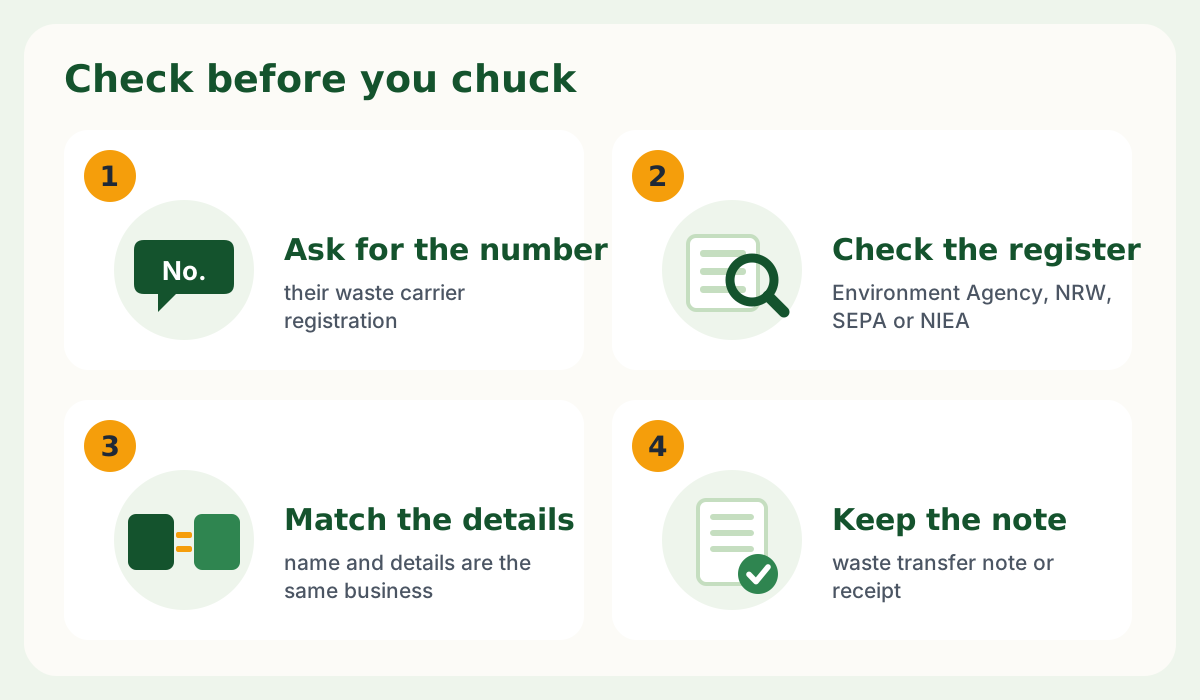
How to check a waste carrier in two minutes
- Ask for their waste carrier registration number.
- Check it on the public register: the Environment Agency in England, Natural Resources Wales, SEPA in Scotland, or NIEA in Northern Ireland.
- Make sure the name and details match the business you're dealing with.
- Ask for a waste transfer note or receipt describing what they took, and keep it.
Clear smarter, pay less
- Sell or donate what you can first. Charities will often collect good furniture for free.
- Use your council's bulky waste collection for a few large items.
- Book one clearance for everything left, rather than several small collections.
- Photograph what needs to go and send the photos with your request; it leads to more accurate quotes.
Getting the right price
On HelloPros, every pro offering rubbish removal or house clearance must hold a checked waste carrier licence before they can bid. Post your clearance for free, add photos, and compare quotes from verified, licensed local pros.
Frequently asked questions
How much does a single van load of rubbish cost?
Prices vary by area and waste type, but a single load is the cheapest unit of a clearance and many firms price small jobs by fractions of a load.
Can I be fined if someone else dumps my rubbish?
Yes. Under your duty of care, councils can fine householders up to £600 if their waste was handed to an unlicensed carrier.
What's a waste transfer note?
A record of the waste taken, who took it and where it's going. Keep it as proof you used a licensed carrier.
Do house clearance firms take everything?
Most take general household items. Hazardous waste such as asbestos needs a specialist and is priced separately.