Key takeaways
- Start eight weeks out: book your removals early, especially for Fridays, weekends and month-end.
- Declutter before you pack; every item you sell or donate is one less to move.
- Take meter readings and photos on the day you leave and the day you arrive.
- Use one checklist for "who to tell" so nothing slips through, from council tax to the DVLA.
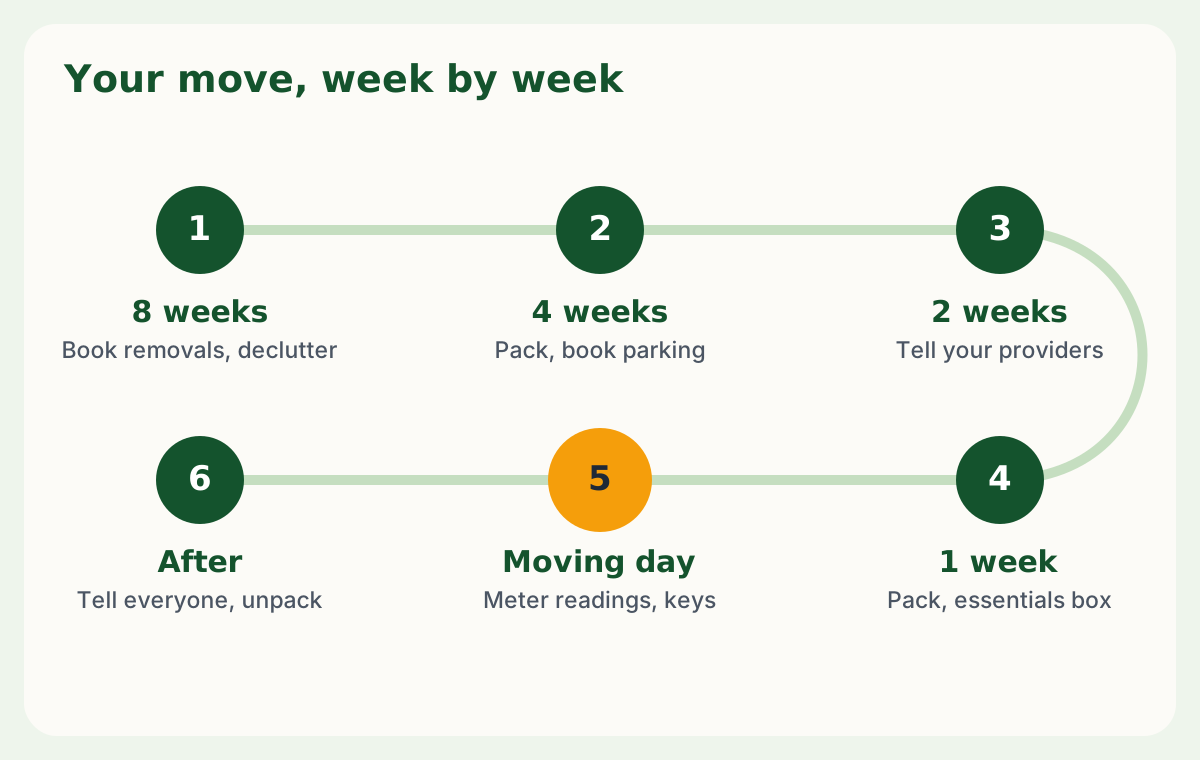
Eight weeks before
- Confirm your moving date and book your removal company or man and van. Popular dates go early.
- Start decluttering room by room. Sell, donate or book a rubbish removal for what you don't want to take.
- If you rent, check your notice period and your tenancy's end-of-tenancy requirements.
- Measure large furniture and check it will fit through the doors and stairs at your new home.
Four weeks before
- Gather packing materials: strong boxes, tape, bubble wrap and marker pens.
- Start packing the rooms and items you use least: lofts, spare rooms, books, out-of-season clothes.
- Arrange parking for the van at both ends. In many areas you'll need a parking suspension from the council, which can take a couple of weeks.
- Book any extra services you need: end of tenancy cleaning, carpet cleaning, handyman jobs or furniture assembly.
- Set up Royal Mail redirection so post follows you.
Two weeks before
- Contact your energy, water, broadband and TV providers with your moving date.
- Confirm your removal booking, arrival time, access and parking.
- Use up frozen and tinned food.
- Plan for children and pets on moving day.
One week before
- Pack everything except essentials, and label each box with its room and a short description.
- Defrost the freezer if it's moving with you.
- Prepare an "open first" box: kettle, mugs, tea, phone chargers, toilet roll, basic tools, medication, bedding and a change of clothes.
- Confirm key handover arrangements with your agent or solicitor.
Moving day
- Take dated photos of meter readings at your old home, and again at your new one.
- Do a final walk-round: cupboards, lofts, sheds and behind doors.
- Keep valuables, documents and the essentials box with you, not in the van.
- At the new home, check the boiler, water stopcock and fuse box location before the crew leaves.
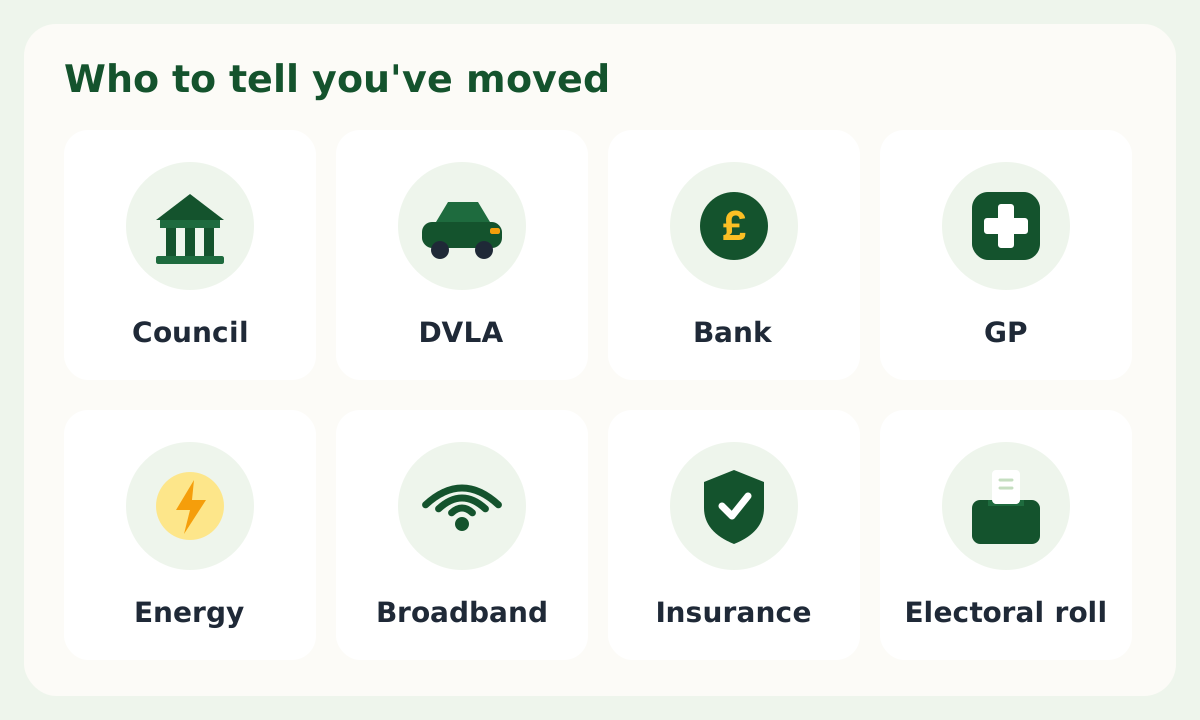
Who to tell you've moved
- Your council, for council tax at both addresses.
- Electoral roll (it also helps your credit record).
- DVLA, for your driving licence and vehicle log book. Both can be updated free online.
- HMRC, your bank, credit cards and pension providers.
- Your GP, dentist and opticians.
- Your employer, and your children's school or nursery.
- Insurers: home, contents, car, pet and life.
- TV Licensing, mobile phone provider and any subscriptions.
The first week in your new home
- Unpack the kitchen and bedrooms first.
- Test smoke and carbon monoxide alarms.
- Check your first bills against your meter photos.
- Book any jobs you noticed on moving day: a deep clean, minor repairs or getting the TV mounted.
Getting help
From man and van services to cleaners, handymen and rubbish removal, you can post every job for your move on HelloPros for free and compare quotes from verified local pros.
Frequently asked questions
When should I book a removal company?
Ideally six to eight weeks ahead, and earlier for Fridays, weekends or the end of the month.
Do I need a parking permit for a removal van?
In many towns and cities, yes. Check with your council; a parking suspension can take a couple of weeks to arrange.
What should go in an essentials box?
Kettle, mugs, tea or coffee, chargers, toilet roll, medication, basic tools, bedding and a change of clothes.
How do I update my driving licence address?
Online through the DVLA, free of charge.