
Key takeaways
- Expect £40–£60 an hour outside London and £55–£75 in London and the South East.
- A full day typically costs £220–£400 outside London and £300–£450 in London.
- Notifiable work, such as a new consumer unit or circuit, must be done by a registered electrician or signed off by Building Control.
- Always ask for the certificate at the end of the job; you'll need it when you sell or let your home.
Hourly and day rates
| Rest of UK | London & South East | |
|---|---|---|
| Hourly rate | £40–£60 | £55–£75 |
| Half day (3–4 hours) | £120–£220 | £180–£280 |
| Full day (7–8 hours) | £220–£400 | £300–£450 |
| Standard call-out (usually includes first hour) | £60–£120 | £90–£150 |
| Emergency or out-of-hours call-out | £120–£350 | £180–£400 |
Prices for common jobs
Typical 2026 prices, compiled from published UK price guides in autumn 2026:
| Job | Rest of UK | London |
|---|---|---|
| Replace a socket or switch | £50–£120 | £80–£220 |
| Fit a light fitting | £50–£150 | £80–£200 |
| Carbon monoxide alarm, supplied and fitted | £50–£180 | £70–£200 |
| EICR (electrical safety report) | £120–£350 | £250–£400 |
| Replace a consumer unit (fuse box) | £450–£750 | £700–£1,200 |
| Full rewire, 3-bed house | £5,500–£8,000 | £6,500–£10,000 |
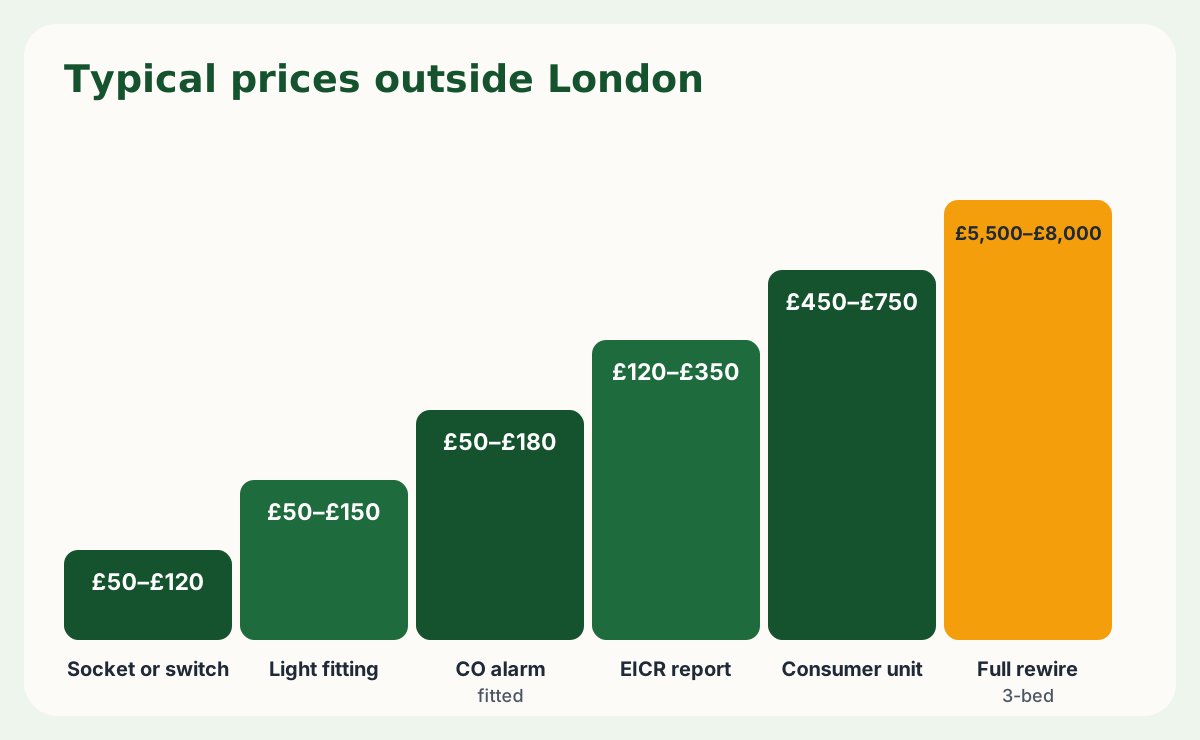
Bigger jobs are usually quoted as a fixed price after a site visit, while small jobs are often charged by the hour with a minimum.
Registered electricians and Part P
In England and Wales, some electrical work is "notifiable" under Part P of the Building Regulations. That includes installing a new circuit, replacing a consumer unit, and certain work in bathrooms and outdoors.
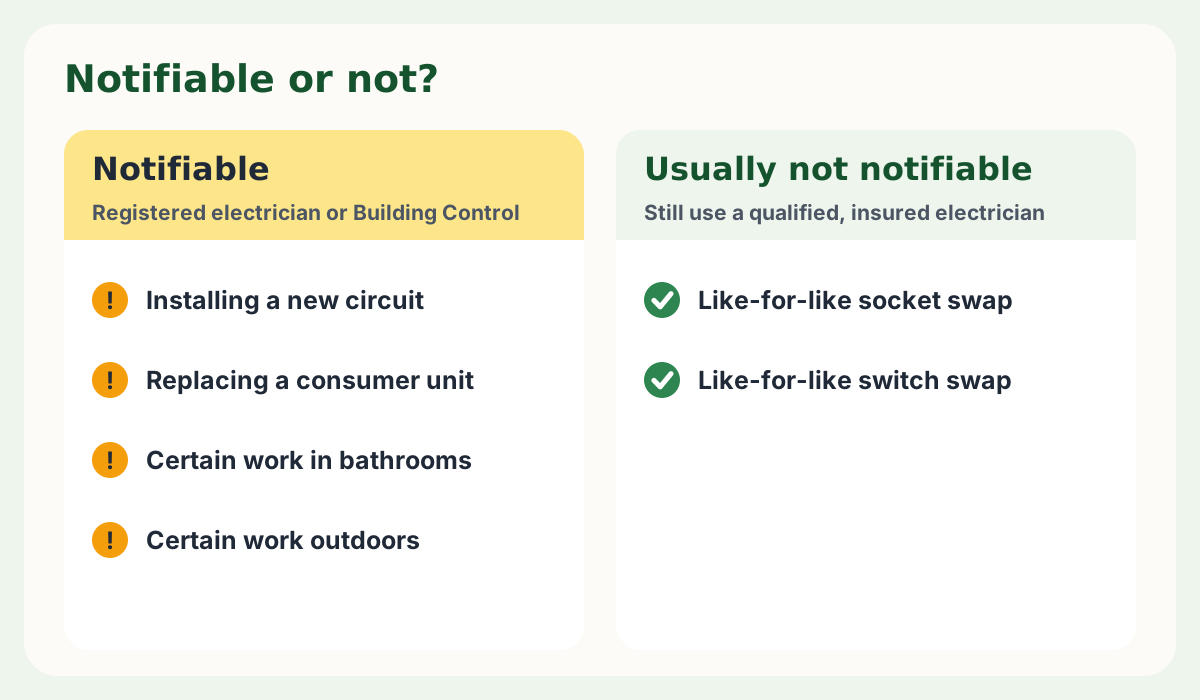
Notifiable work must either be carried out by an electrician registered with a government-approved competent person scheme, such as NICEIC or NAPIT, or be inspected and signed off by your council's Building Control, which costs extra and takes longer. Scotland has its own building standards system.
A registered electrician will notify the work for you and give you a certificate confirming it meets the current wiring regulations (BS 7671). Keep it safe: buyers, mortgage lenders and insurers may ask for it.
Landlords: EICRs are a legal requirement
If you let a property in England, the electrical installation must be inspected and tested by a qualified person at least every five years, with a copy of the report given to tenants. Many landlords book their EICR at the same time as other annual safety checks.
How to choose an electrician
- Check registration: search the competent person scheme's register using the electrician's name or postcode.
- Ask about insurance: public liability insurance is a must.
- Get a written quote that lists materials, labour, certificates and the expected time.
- Ask what certificate you'll receive: an Electrical Installation Certificate for new circuits, or a Minor Works Certificate for smaller jobs.
- Be cautious of very low prices, cash-only requests or an unwillingness to provide paperwork.
Getting the right price
Post your electrical job on HelloPros for free, add photos of the area or the fuse box, and compare quotes from verified local electricians, including their reviews and registration details.
Frequently asked questions
Do I need a registered electrician to change a socket?
Like-for-like replacements are usually not notifiable, but using a qualified, insured electrician is always the safer choice.
How long does an EICR take?
A typical home takes two to four hours, depending on the size and number of circuits.
How much does a fuse box replacement cost?
Typically £450–£750 outside London and £700–£1,200 in London.
What is Part P?
The part of the Building Regulations in England and Wales covering electrical safety in homes. Notifiable work must be done by a registered electrician or approved by Building Control.